Case study 003
A week of meals for your household, in thirty seconds.
LiveLive since September 2026, one month after the concept was agreed.
- Speed
- 30sto plan a week for a whole household
- Library
- 550+recipes indexed by symptom, diet and ingredient
- Delivery
- 1 mofrom concept to live, September 2026
01Context
Great recipes, and the same question every Sunday
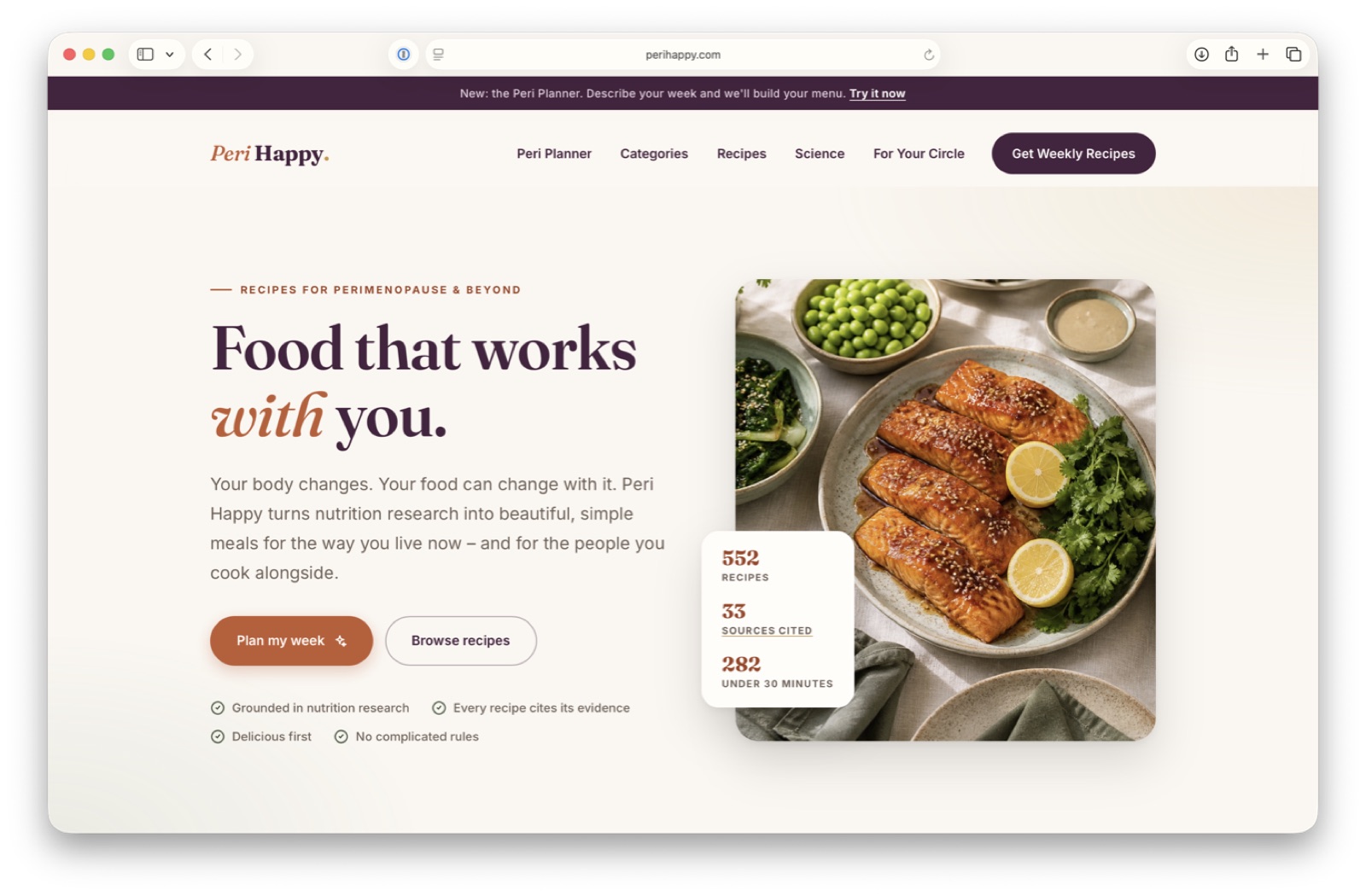
Peri Happy's readers trusted the recipes. What they didn't have was time. A week of meals that suits a woman managing symptoms, a partner who eats differently, two children and a budget is a planning problem, not a browsing problem.
Every recipe site has a search box. Almost none of them will tell you what to cook on Thursday.
02What we built
The Peri Planner
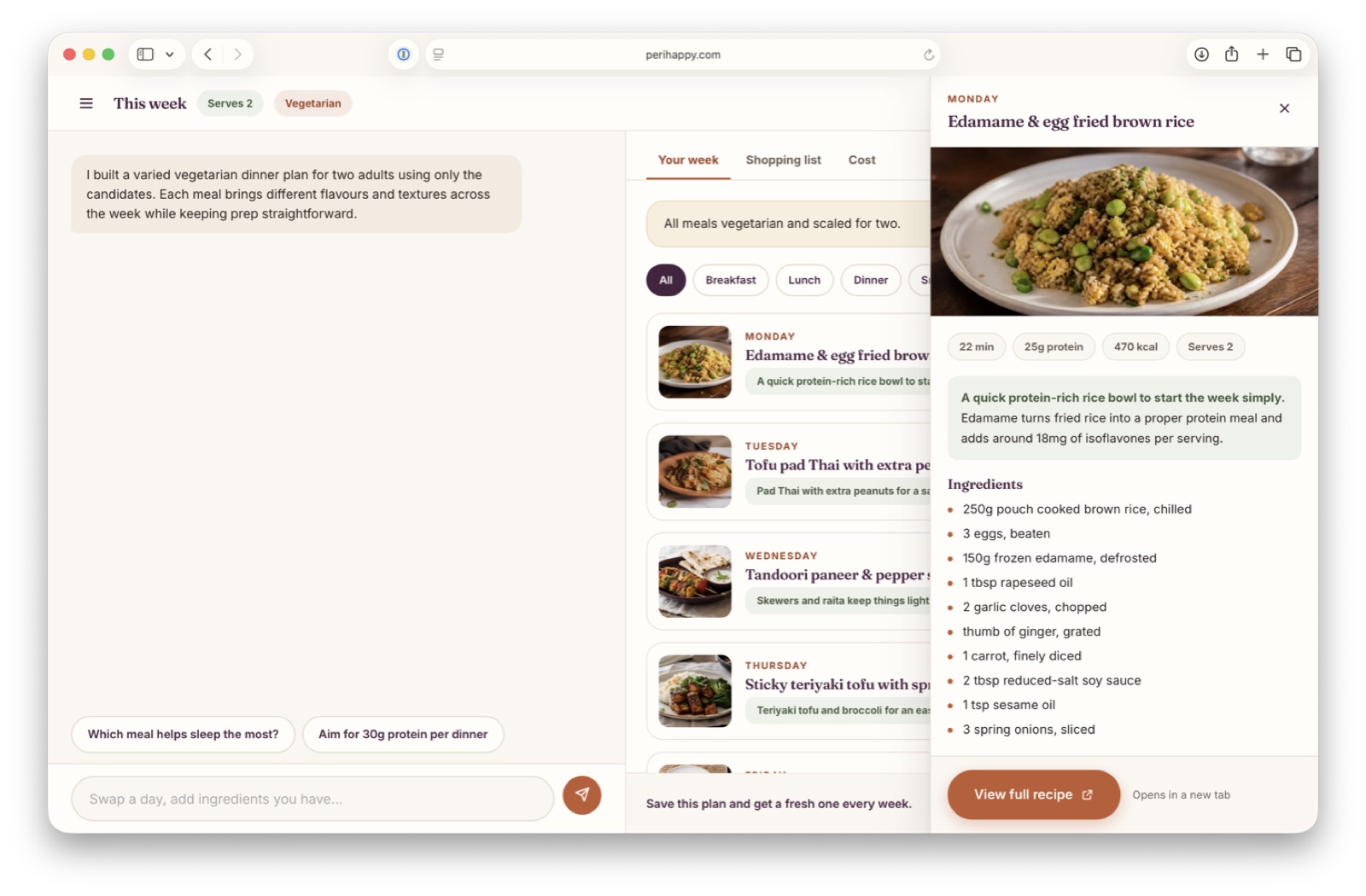
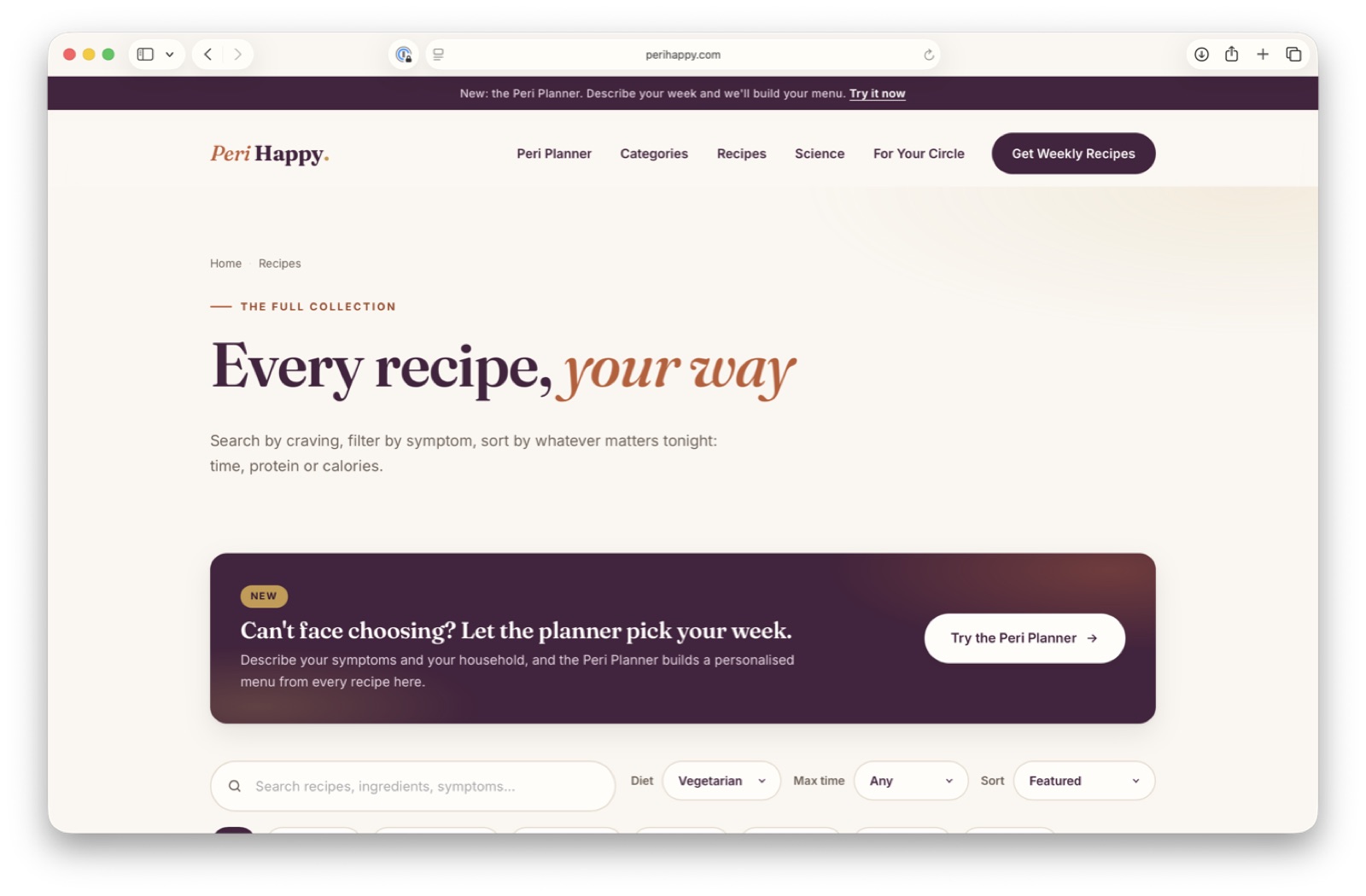
Every recipe indexed and made available to a weekly planner that takes diet, family size and current symptoms and produces a week: seven days of meals, a shopping list, and a breakdown of each meal.
Then the part that makes it feel like a person rather than a filter: you tailor it by typing. “I want fish tonight but no one else eats it” swaps one plate and leaves the rest alone. Community tooling sits alongside, so the plan is something to talk about, not just download.
03How
Constraints first, then language
Planning is a constraint problem before it's a language problem. The planner solves diet, symptom and household constraints deterministically over the indexed library, and uses models for the parts that need them: understanding a typed request, explaining a swap, writing the breakdown. Multi-model, chosen per task.
It runs on Edge Compute behind Peri Happy's site, which their team deploys and manages through Edge's agentic tooling.
04What changed
The library became a service
Live in September 2026, one month after the concept was agreed. For Peri Happy, a content site gained a product: something to build membership around, and a reason for 15,000 weekly readers to come back midweek.
Before
An evening of browsing and a notepad.
Now
30sto plan a weekThirty seconds, and better the more precisely a reader says what they want.
05What's next
Plans that learn, and a planner that shops
The next concepts on the table:
- 01Plans that remember what a household actually cooked and liked
- 02Symptom tracking that feeds the planner
- 03A shopping list that fills a basket at the reader's supermarket, rather than describing one
Run by Edge Expert Services. Labs stays alongside the team as their R&D partner.
In their words
Peri Happy on the work
We describe what we want and it's live minutes later. We spend our time on recipes and research, not infrastructure.
Peri Planner 003
Live- Client
- Peri Happy, perihappy.com
- Sector
- Health & consumer. Nutrition and community.
- Status
- Live, launched September 2026.
- Build
- One month, concept to live.
- Labs' role
- Report
- Concept and spec
- Build
- Expert Services
- Now run by
- Edge Expert Services, deployed through Edge's agentic tooling
- Stack
- Multi-model plannerConstraint solving over an indexed libraryEdge ComputeEdge CDNEdge DNSEdge Shield
- Related
- Peri Happy on Edge
More work
All seven buildsTurn content into a product
If you publish something people trust, there's probably a service hiding inside it. A month is often enough to find out.
Or write to labs@edge.network